
Youyunpu Optoelectronic Tech
Name:Jenny Li
Tel:+86 19963093538
Email:jennyli0927@163.com
Address:Oulong Science and TechnologyPark,Jinma Road,Weifang City,Shandong Province,China


Name:Jenny Li
Tel:+86 19963093538
Email:jennyli0927@163.com
Address:Oulong Science and TechnologyPark,Jinma Road,Weifang City,Shandong Province,China
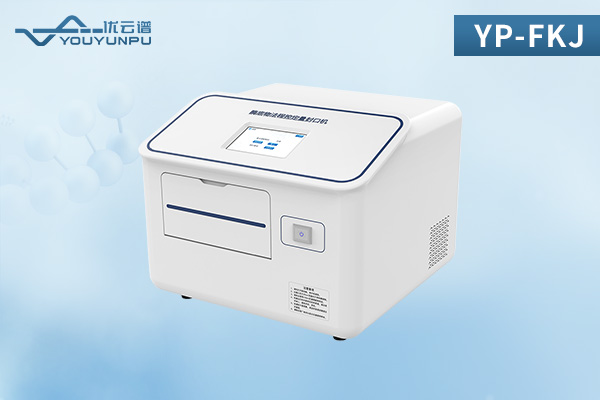
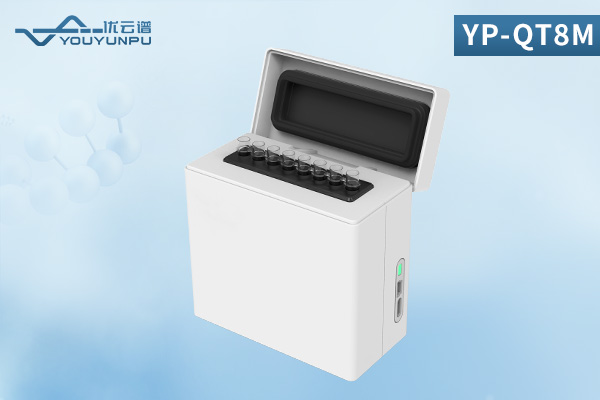
【Introduction】:Youyunpu Optoelectronic Tech specializes in R&D & production of Program-controlled Quantitative Sealing Machine, with custom services. Complete Program-controlled Quantitative Sealing Machine models, high detection accuracy, trusted by customers.
GB 3838-2002 Environmental Quality Standards for Surface Water
CJ/T 206-2005 Water Quality Standards for Urban Water Supply
GB/T 5750.12-2023 Standard Examination Methods for Drinking Water
CJ/T 51-2018 Standard Examination Methods for Urban Wastewater – Determination of Thermotolerant Coliforms by Enzyme Substrate Method
HJ 1001-2018 National Environmental Protection Standard – Water Quality – Determination of Total Coliforms, Fecal Coliforms and Escherichia coli
| Item / Method | Multiple-tube Fermentation | Membrane Filtration | Enzyme Substrate Method |
|---|---|---|---|
| Detection Time | 3–5 days | 2–3 days | 1 day |
| False Positive | — | 23–26% | 0.01% |
| Detection Range | 2–1600 MPN/100mL | — | 1–2419.6 MPN/100mL |
| Environment | Clean laboratory required | Clean laboratory required | No special requirements |
| Operator Skill | Professional & skilled | Professional & skilled | Simple training sufficient |
| Quantitation | MPN table | Direct count | MPN table |
| Method | 15 tubes | Colony count | 51/97-well plate |
No clean room required.
Manual operation time < 1 minute.
No medium preparation or extensive glassware sterilization needed.
Qualitative and quantitative analysis completed within 24 hours; no confirmation test required.
β‑galactosidase from total coliforms hydrolyzes ONPG, turning the medium yellow.
β‑glucuronidase from Escherichia coli hydrolyzes MUG, producing characteristic fluorescence.
Thermotolerant (fecal) coliforms hydrolyze ONPG at 44.5℃, turning the medium yellow.
High Efficiency & Energy Saving: Optimized heating element layout and temperature control algorithm improve efficiency and reduce power consumption.
Easy Operation: Intuitive touchscreen interface for parameter setting; self‑diagnosis for convenient maintenance.
Safe & Reliable: Overload protection, short‑circuit protection and multiple safety functions.
Purpose: Detection of total coliforms, Escherichia coli, fecal coliforms in water by enzyme substrate method complying with GB 5750‑2006
Reliability: No leakage, no hole breakage
Stability: Supports > 50,000 samples; service life > 5 years
Convenience: Backspace key, quantitative tray counter, auto power saving, one‑key drain, large LCD, protective window, error alarm
Speed: No clean room needed; results in 24 h
Weight: 14.2 kg
Dimensions: 42 cm (L) × 41 cm (W) × 33 cm (H)
Preheating time: ≤ 3 min
Noise: < 48 dBA
Housing temperature: < 40℃
Sealing speed: 10 seconds
Power supply: AC 220 V ±10%, 50 Hz
Efficiency: ≤ 12 sec per tray (51‑well / 97‑well)
Operating temperature: -10℃ ~ 50℃
Detection range:
51‑well tray: 0–200 MPN/100 mL (undiluted)
97‑well tray: 0–2419 MPN/100 mL (undiluted)
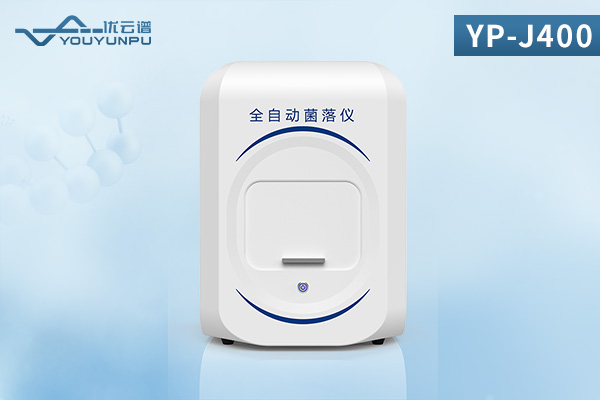
Fully Automatic Colony Counter
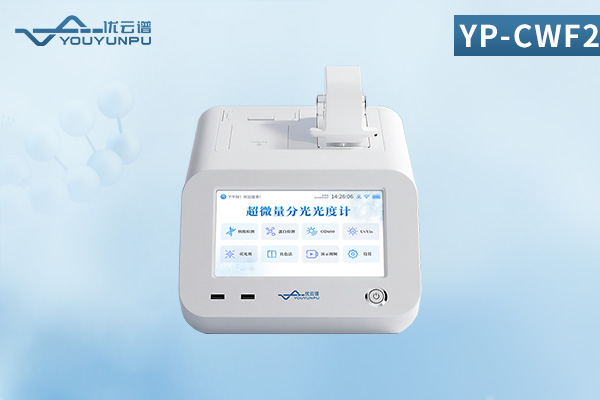
Nucleic Acid and Protein Concentration Analyzer
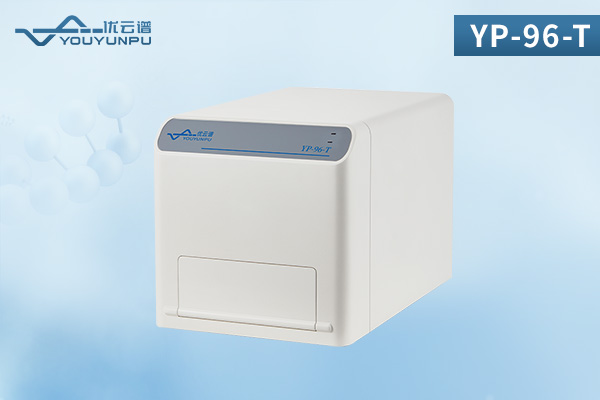
Multifunctional Microplate Reader
Multi-channel Fluorometer
Full-Wavelength Microplate Reader: An All-Round Spectral Analysis Platform for Insight into the Microscopic World
2026-02-02Automatic Colony Analyzer: An Intelligent Solution for Modern Microbiology Laboratories
2026-02-02Brand Recommendation for Handheld Portable Fluorometers: Youyunpu Fluorometers Enable Accurate and Rapid Detection
2026-02-02Which brand is good for microbial broth concentration meters? Youyunpu D600 leads a new research experience.
2026-02-02Which brand of full-wavelength microplate reader is good? Youyunpu leads new scientific research standards with precision and efficiency.
2026-02-02Microbial Limit Filtration System Manufacturer Recommendation: Youyunpu Guards the Cleanliness Bottom Line of Experiments with High Efficiency and Reliability
2026-02-02How Does a Real-Time Quantitative PCR (qPCR) Detector Work? Principles and Applications in One Article
2026-02-02Youyunpu Fluorescent Quantitative PCR Detector Manufacturer Analysis: How Does the Technical System Support Stable Nucleic Acid Detection?
2026-02-02



 +86 19963093538